
Ag economy uncertainty and volatility seem to be the name of the game in 2026. Many of the factors shaping the economy (and reducing farmers’ margins) remain out of the producer’s control.
In this edition of President’s Insights, High Plains Farm Credit President and CEO, Kevin Swayne, explores the forces at play and provides options to help producers navigate the unpredictable cycles.

Key Takeaways
A Global Agricultural Trade Environment That Feels Anything but Settled
At the 2026 Kansas Commodity Classic, producers were reminded just how interconnected their livelihoods are with world politics. Analysts emphasized that trade uncertainty continues to rise due to aggressive U.S. trade policies, retaliatory measures from trading partners, and ongoing renegotiations of key agreements. Coupled with geopolitical tension abroad, major global players—from China to the European Union—are actively exploring trade partnerships that bypass the U.S. altogether.
Low Crop Prices Tighten the Belt Even Further
As 2026 began, many producers across the Midwest and Great Plains entered the year facing low crop prices and more than $34 billion in combined row‑crop losses nationwide before insurance and support programs. Economists attribute these challenges to slow global demand, sustained strong crop production and disrupted trade relationships.
Input costs have not offered much relief either. Farmers continue to pay more for fertilizer, machinery, and other essentials—costs that were amplified by tariff impacts. The result is a squeeze that rural producers know all too well: higher expenses, lower prices, and thinner margins.
A Mixed Outlook for the Ag Economy: Strength in Livestock, Strain in Crops
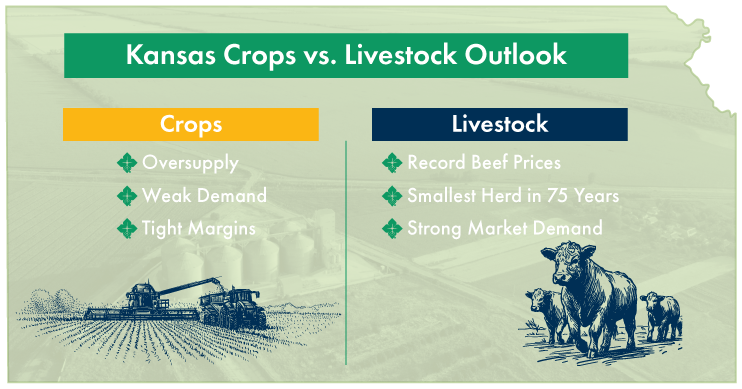
Despite the pressure in crop markets, there are signs of resilience—especially in livestock. The U.S. cattle herd is the smallest it has been in 75 years, pushing beef prices to record highs. This has offered welcome support to Kansas ranchers and diversified operations. Yet even this bright spot highlights the contrasts across the ag economy: livestock is buoyed by scarcity, while crops are weighed down by oversupply and uncertain demand.
Navigating the Uncertainty: What Farmers and Ranchers Can Do
While no one can predict where markets will go next, producers can take meaningful steps to manage risks and stabilize their operations:
Crop insurance, diversifying marketing strategies, and maintaining flexible operating lines are more important than ever. Producers should continue to evaluate the right combination of forward contracting, hedging tools, and insurance products to protect against downward price swings.
- Watch Policy Developments Closely
Trade negotiations, tariff decisions, and legislative developments can turn markets quickly. Staying informed helps producers make timely adjustments as new policies emerge.
- Prioritize Cost Control and Increase Farm Efficiency
With high and often unpredictable input costs, detailed cost tracking and careful planning can preserve margins in a volatile environment.
- Maintain Open, Proactive Communication With Your Ag Lender
A strong and transparent relationship with your lender can make a significant difference in navigating volatile markets and an uncertain ag economy. Being upfront with changes, asking questions, and discussing concerns early allows lenders to identify solutions more quickly and tailor financial tools to your operation’s needs.
The Road Ahead for Kansas Farmers and Ranchers
Kansas farmers and ranchers are no strangers to adversity. They have weathered droughts, price plunges, and national crises—and each time, they have adapted, innovated, and pushed forward.
The future will not be without its uncertainties and setbacks, however High Plains Farm Credit is prepared to face the challenges with you and will work harder than ever to utilize our lending and agriculture expertise to structure loans to help you today and into the future.
– Kevin



 Equal Housing Lender