Livestock Risk Protection (LRP) insurance is a federally sponsored insurance program that protects ranchers when cattle markets fall. High Plains Farm Credit crop insurance agents can help producers select coverage for fed cattle, feeder cattle, and swine. Coverage is customizable with levels and insurance periods aligned with marketing goals.

High Plains Livestock Risk Protection (LRP) Insurance Coverage

Manage Your Risk as More Than One of the Herd

Raising livestock comes with uncertainty, volatile input costs, fluctuating markets, and cyclical price downturns. LRP insurance coverage helps you protect your cattle or swine against price drops, while giving you the flexibility to market when it makes sense. 

With High Plains Farm Credit, you stand out as more than "just one of the herd," backed by experts who understand the risks you face. 
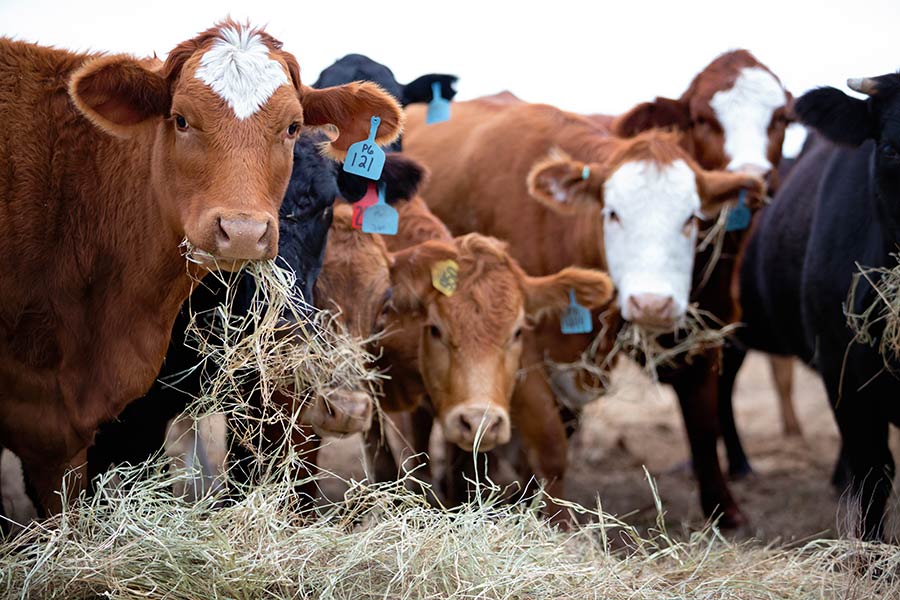
Group of cattle eating hay on a Kansas ranch, symbolizing herd protection with LRP insurance and livestock risk coverage.

Understand LRP Insurance Coverage

Livestock Risk Protection (LRP) is a federally sponsored livestock insurance program that protects against a decline in market prices. Producers may choose from a variety of coverage levels and insurance periods aligned with marketing goals. 

Coverage is available for: 

  • Fed cattle

  • Feeder cattle (including unborn)

  • Swine (including unborn)

This makes LRP a flexible tool for producers without the large volume required for futures contracts. 

How Livestock Risk Protection Works

  • Select an end date near your expected sale date.

  • Choose a coverage price level.

  • If the CME ending value is lower than your insured value, LRP pays an indemnity.

Key Details

  • Federally subsidized premiums reduce producer costs by 20–35%.

  • Premium payments are due at the end of the endorsement period.

  • Coverage is calculated on a per-head basis with endorsement tracking to fit your operation.

Livestock Risk Protection vs Futures/Options

Livestock Risk Protection Futures Contract Options on Futures
Protects against downside risk. Yes Yes Yes
Upside price gain potential is… Unlimited Limited Unlimited
Coverage price is based on… Aggregate cash price Futures price Futures price
Basis risk is… Covered (in part) Not covered Not covered
Cost of coverage is… Set by daily price; guaranteed Not set; market order or limit order for fill Not set; market order or limit order for fill
At expiration there is a(n)… Indemnity paid if due Need to exit contract or, for fed cattle, deliver Need to exit option or exercise option
The contract is a(n)… Insurance policy Derivative contract Derivative contract
Acceptability by lenders is… Universal Limited Limited

Learn the Differences

between LRP, futures, and options. The unique benefits of LRP insurance make it an attractive solution for livestock producers.

The Benefits of LRP

  • Guaranteed Price – There is no bid-ask spread.
  • Insurance Policy – LRP is not a derivative and can be purchased from your trusted High Plains Farm Credit agent, similar to crop insurance.
  • Limited Basis Risk Coverage – Any number of head can be covered from one head up to the program’s limit. This coverage can also be tailored to account for normal mortality.
  • Premium Payments – Payments are due at the end of the insurance period, allowing producers to pay premiums after the sale.
  • USDA Subsidy – LRP premiums are subsidized by 20% to 35%, based on coverage level.
  • Flexible Endorsement Period Options – Producers can allow for unforeseen market conditions and match the time when livestock will be marketed.
  • Target Weight Range – LRP provides a wider target weight range than the Chicago Mercantile Exchange (CME).

Why Choose HPFC for Livestock Risk Protection Insurance

High Plains Farm Credit has been protecting producers for over a century, combining local expertise, federally subsidized programs, and customer ownership through cooperative values. 

  • Local agents with real ag experience.

  • Historical performance and trusted relationships in Kansas.

  • Patronage dividends return value to you.

  • Backed by the nationwide Farm Credit System.

Purchase LRP Insurance Coverage

When to Purchase Coverage

  • Available year-round.

  • USDA RMA posts daily premium rates and coverage prices.

  • Coverage is available each trading day after markets close until 9:00 am CST.

As you explore LRP options, the RMA also provides a cost estimator tool, allowing you to put numbers to the possible price of your LRP coverage.

How to Purchase Coverage

  • 1

    Connect with an HPFC insurance agent.

  • 2

    Review daily coverage options with help from our experts.

  • 3

    Choose the LRP coverage that fits your herd’s needs.

Headshot of Cory Johnson, Vice President Crop Insurance

Cory Johnson

VP Crop Insurance

785-656-0124

Headshot of Paige Hrabe, Crop Insurance Agent

Paige Hrabe

Crop Insurance Agent

785-259-2898

Frequently Asked Questions About LRP

During drought, the Risk Management Agency (RMA) may adjust rules. For example, in a past drought, the RMA allowed producers to sell livestock earlier than the standard 60-day rule before the coverage end date.

Yes. After an original LRP feeder cattle insurance policy expires, producers may take out a new policy on the same group of cattle.

Example: A producer insures calves at 650 pounds but decides to feed them out to slaughter weight. Once the first endorsement ends, a second LRP policy can be written to cover them to the new target weight.

Yes. Make sure you have AD-1026 completed at FSA to ensure you receive the subsidy.
Work with an approved HPFC agent to set up your livestock risk protection insurance coverage. Once enrolled, your agent can write endorsements daily after markets close until 8:25 am CT the next morning.

Price Adjustment Factors (PAFs) are used in Livestock Risk Protection (LRP) insurance to adjust prices and ending values for cattle that fall outside the standard weight and type used in the CME Feeder Cattle Contract (700–849 lb steers, excluding Brahman or dairy breeds). 

PAFs account for differences in breed, weight, and sex — such as heifers, Brahman-influenced, or dairy-cross cattle — to ensure fair coverage prices and indemnity payouts. These adjustments help align LRP coverage with the true market value of your specific cattle. 

PAFs are published by the Risk Management Agency (RMA) and included in your Specific Coverage Endorsement, so you don't need to calculate them manually. Your agent will help apply the correct PAF based on your cattle type and marketing goals. 

You can take out an endorsement for heifers and for steers with a 110% PAF on steers and 100% on heifers. Taking out an endorsement on unborn calves places all calves in a single category with a 105% PAF.
If cattle are less than 50% Brahman or dairy, no adjustment applies. If over 50%, the Predominantly Brahman or Dairy PAF applies, lowering coverage values accordingly.

Yes. Policy limits for Livestock Risk Protection are as follows:

  • 12,000 head per endorsement
  • 25,000 head per crop year
No. If an animal on LRP dies, the insured must let the agent know within 72 hours of their findings. The insured will then have to sign a death certificate.
Yes. Producers can simultaneously buy or sell CME put options and have LRP coverage on the same livestock.
Yes. If livestock fail to meet the minimum target weight, the number covered will be reduced unless extraordinary circumstances (like drought or feed shortages) are proven.
Yes. Fed cattle must be marketed for slaughter at the endorsement end date. Feeder cattle may be retained or placed in a feedlot.
No. Producers may retain ownership and either sell later or take out another endorsement. Sales are allowed up to 60 days before the end date.
If you keep a portion (e.g., 50 out of 100 heifers), you must show proof of sale for the rest. Indemnities are still paid based on the full endorsed group.
Endorsements may be written after markets close until they reopen at 8:25 am CT the next day.
Young crops growing in a wide Kansas farm field, illustrating crop insurance coverage for early growth stages.

Ready to Work With High Plains?

The Process Starts Here:

  1. Contact our team today!
  2. Share your goals for your operation and the tools you’d like to use to achieve them.
  3. Get to work with the protection and support you need.