
The Farm Credit journey from 1916 to 2025 has been one of growth, challenges, and through it all, commitment to farmers and ranchers. From the System’s foundation, we’ve enjoyed every opportunity to partner with the producers working to feed our nation and the world.

Behind the BioStar
Ag Lending Roots
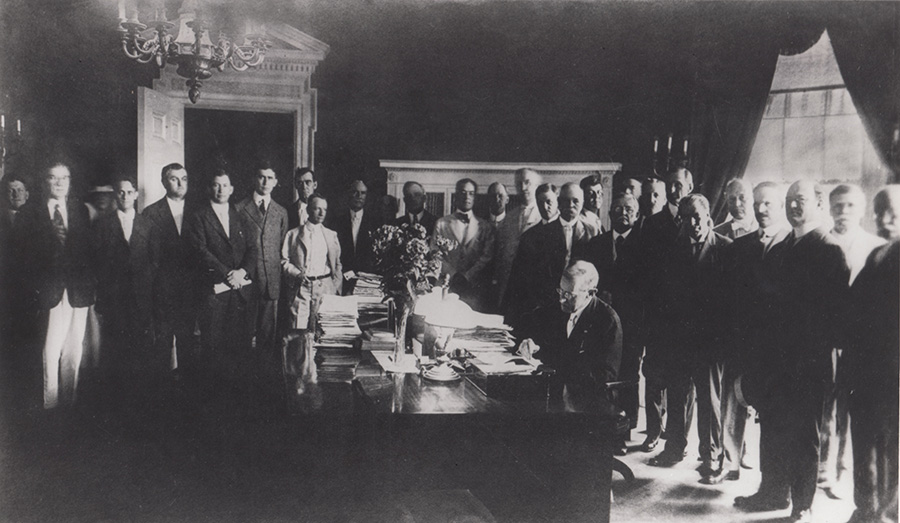
July 17, 1916: It all began more than 100 years ago, with President Wilson’s signature and the Federal Farm Loan Act. This piece of legislation created the Federal Farm Land Bank system that included a Federal Farm Loan Board, 12 Federal Land Banks (FLBs), cooperative National Farm Loan Associations, and for-profit Joint Stock Land Banks.
Nearly one year later, A.L. Stockwell received the first Farm Credit agricultural loan in Larned, Kansas, right here in our territory.
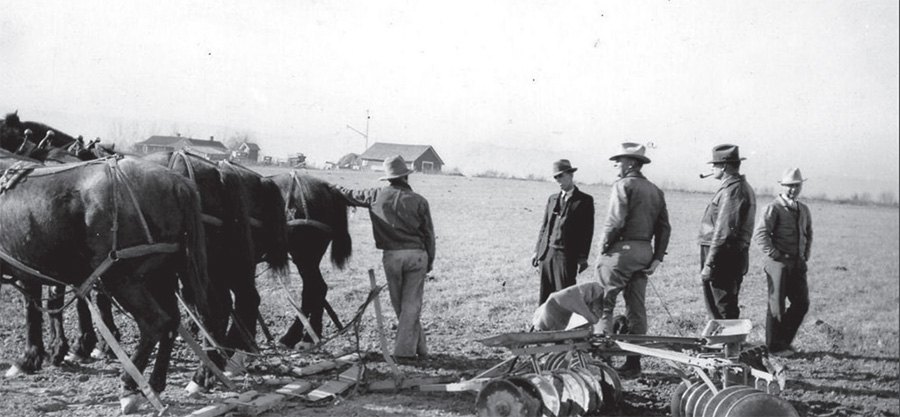
Over the next decade and a half, the System continued to develop with the extension of service and increasing funding capability. Later, as farmers struggled through the Great Depression, the Farm Credit System was rescued and expanded further to help provide for the needs of American farms.
It was during this time that the Farm Credit Act of 1933 established Production Credit Associations (PCAs) to make short-term loans and Banks for Cooperatives to lend to cooperatives.
A Period of Farm Credit Growth
The following decades united FLBs, PCAs, and Banks for Cooperatives in their mission of helping farmers feed a nation at war and then set the System on a path toward independence.
In 1947, the Federal Land Banks paid off the last of the federal capital provided during the Great Depression. Just six years later, the Farm Credit Act of 1953 provided the Farm Credit Administration independent regulator status.
Throughout the 1970s and 80s, Farm Credit continued to grow in its lending authority and achieved borrower-owned status. The System also deepened its support for young, beginning, and small farmers by establishing a program for this group in each Farm Credit District.
The System Restructure
Despite this growth and success, the Farm Crisis of the 1980s was a uniquely challenging time for institutions. The struggle ultimately led to the Agricultural Credit Act of 1987 that provided financial assistance and directed mergers and other reorganizations. The result: a more efficient, stronger Farm Credit System.
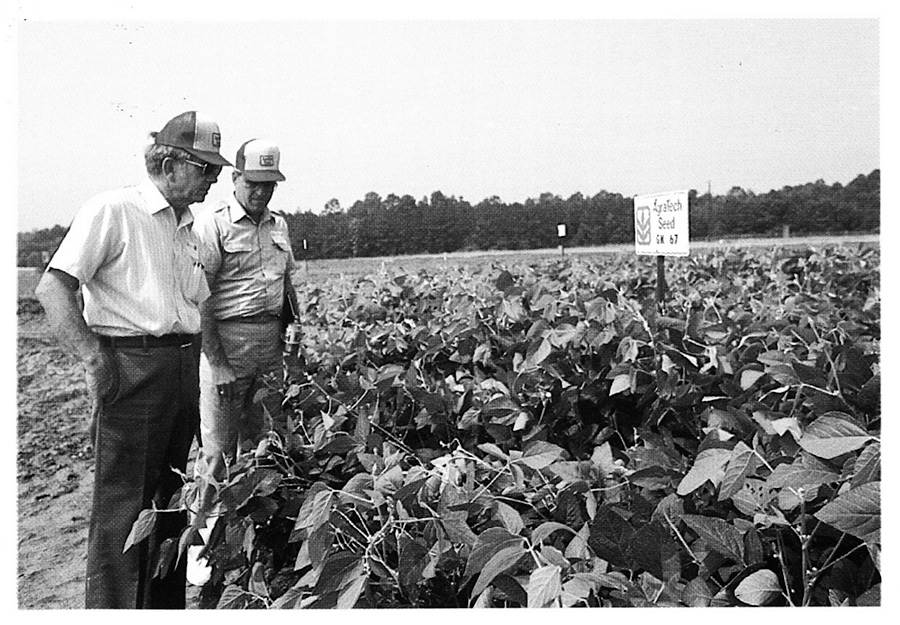
The restructure led to the creation of the “Parent ACA” that you may recognize today. In fact, during the time of transition, Federal Land Bank Associations converted to Federal Land Credit Associations (FLCA) or joined with PCAs, creating ACAs.
With greater efficiency as its strength, the restructured Farm Credit System repaid the last of the federal capital provided during the Farm Crisis. In 2005, Farm Credit once again became a fully borrower-owned cooperative.
Birth of the BioStar
Now, two decades later, Farm Credit is proud to continue to operate under this borrower-owned status. Through the good times and bad, Farm Credit has persisted in its mission to support farmers and ranchers.
As we do so, the BioStar remains our guide, with symbolism rooted in the rich history of the Farm Credit System.
When Farm Credit first came into existence, institutions operated under hundreds of varying logos. As the System grew and developed, leadership created a set of logos in 1963 to represent our all-inclusive agricultural financial solutions.
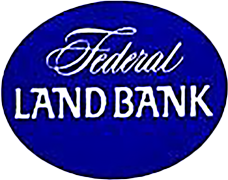
At that time, each of the three main functions of the Farm Credit System bore a different color of logo: blue for the Federal Land Banks and Federal Land Bank Associations, red for the Production Credit Associations, and gold for the Banks for Cooperatives.

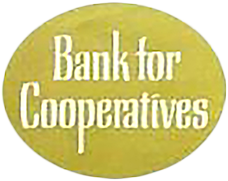
While this group of logos served for a time, the struggle of the Farm Crisis brought with it the desire for a strengthened, coordinated, system-wide identity. Farm Credit leaders hired a corporate design firm and, in the spring of 1985, released the BioStar. The logo identifies the national Farm Credit System today and portrays the System as strong and unified, ready to meet the ever-changing needs of the ag industry.
Symbolism of the BioStar
The deliberate design of the BioStar is founded upon Farm Credit’s mission in partnering with agricultural producers.

From the Fam Credit establishing charter to provide farmers and ranchers with ag lending solutions, to the challenges of the Great Depression and the Farm Crisis, to our continued commitment to serving the producers that feed the world: Each element of the Farm Credit BioStar suggests our desire for excellence and dedication to the growth of our customer-stockholders.
This birthday, the Farm Credit System celebrates the resilience and progress of a cooperative founded for the success of the people it serves.
From all of us here at High Plains Farm Credit, thank you for your partnership and commitment to our mission, throughout our history, today, and in the journey to come.








 Equal Housing Lender